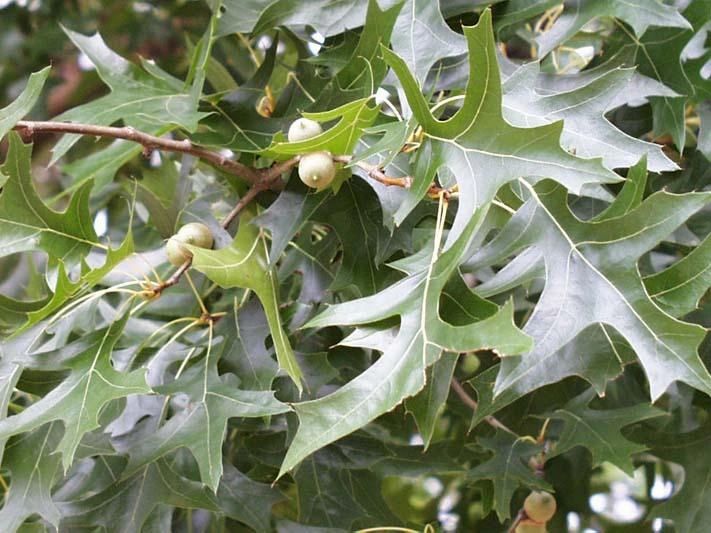
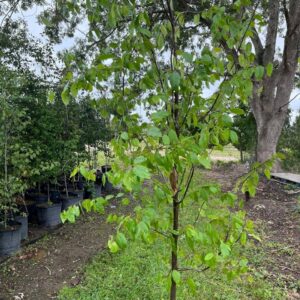
Quercus palustris, Pin Oak, is a popular native deciduous shade tree prized for its distinctive branching structure, attractive foliage, brilliant autumn color, and adaptability to a variety of landscape settings. Native to eastern and central North America, Pin Oak is a medium to large-sized tree commonly found in moist woodlands, floodplains, and along stream banks. Its naturally pyramidal growth habit features a strong central leader and distinctive horizontal branching, with lower branches characteristically sweeping downward, creating an attractive and recognizable silhouette.
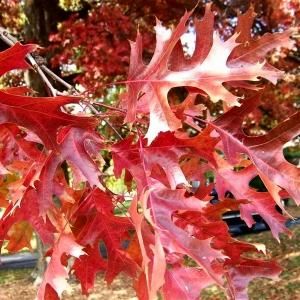
The deeply lobed, glossy dark green leaves provide a dense canopy throughout the growing season before transforming into beautiful shades of bronze, russet, and reddish-brown in autumn, often persisting into early winter. In spring, inconspicuous flowers appear, followed by small, rounded acorns that provide a valuable food source for squirrels, deer, wild turkeys, and other native wildlife. Its dense branching structure offers nesting opportunities and protective cover for numerous bird species, while its foliage supports native caterpillars and other beneficial insects that contribute to healthy ecosystems.
Pin Oak performs best in full sun and moist, acidic soils and is particularly well suited to low-lying areas, rain gardens, parks, and larger residential landscapes. It tolerates occasional flooding and poorly drained conditions, making it a valuable option for landscapes with consistent soil moisture. With its symmetrical form, attractive seasonal foliage, relatively fast growth, and important ecological contributions, Quercus palustris is an excellent native shade tree for adding structure, wildlife habitat, and long-term beauty to sustainable landscapes.