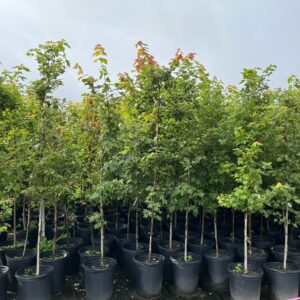
Juniperus virginiana (Eastern Red Cedar) is a hardy, evergreen native tree valued for its year-round foliage, adaptability, wildlife benefits, and versatility in residential and naturalized landscapes. Native to eastern and central North America, Eastern Red Cedar is one of the most widely distributed native conifers in the eastern United States. This durable evergreen features dense, aromatic foliage that ranges from deep green to blue-green, providing excellent year-round color, privacy, and visual interest. Its attractive pyramidal growth habit makes it an excellent choice for specimen plantings, privacy screens, windbreaks, hedgerows, and wildlife habitat restoration.
Female trees produce distinctive blue, berry-like cones that provide an important food source for numerous native bird species, including cedar waxwings, robins, and other overwintering wildlife. The dense branching structure also offers valuable nesting sites and protective shelter for birds and small mammals. Eastern Red Cedar is exceptionally adaptable, tolerating a wide range of soil conditions, including dry, rocky, sandy, and nutrient-poor soils. Once established, it is highly drought tolerant and thrives in full sun, making it an excellent choice for low-maintenance landscapes and challenging planting sites. Its aromatic wood has historically been valued for its natural resistance to decay and insects, adding to the tree’s practical and ecological significance.
Whether used as an evergreen privacy tree, a windbreak, a native habitat planting, or an attractive landscape specimen, Juniperus virginiana provides dependable year-round beauty, wildlife value, and environmental benefits while supporting the biodiversity of native ecosystems.
**We do not sex our cedars**