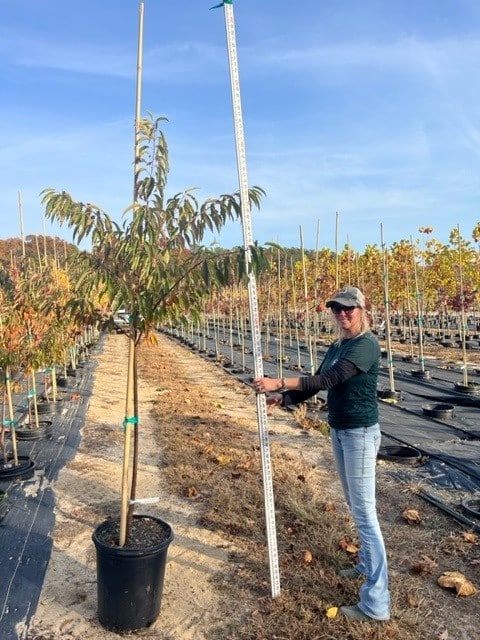
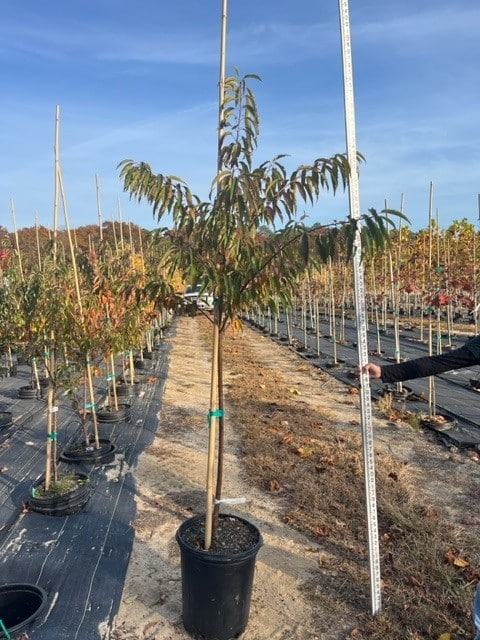
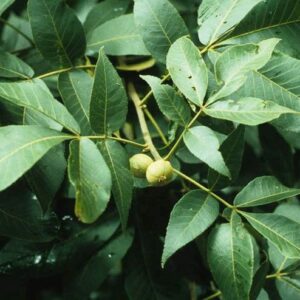
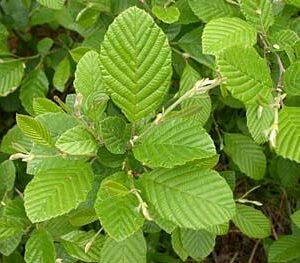
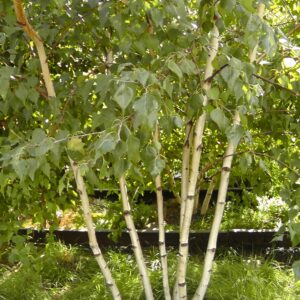
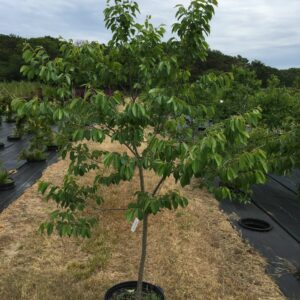
Ranging from southeastern Canada through the eastern United States west to eastern Texas, with disjunct populations in central Texas and mountains of the southwestern United States, Mexico, and Guatemala, Black cherry is a 25-110 ft. deciduous tree, distinctly conical in youth. When open-grown it becomes oval-headed with spreading, pendulous limbs and arching branches. Crowded trees grow tall and slender. Southwestern varieties are often shrubby. Leaves shiny on the upper surface; blade oblong with a long pointed tip and tapering base, margins finely serrate. White flowers are held in drooping racemes after the glossy leaves have emerged. The dark red fruit changes to black from August through October. Aromatic tree; crushed foliage and bark have distinctive cherry-like odor and bitter taste, owing to the same cyanide-forming toxic compounds, such as amygdalin, found in the wood and leaves of some other woody members of the Rosaceae.
Fall foliage is yellow. This widespread species is the largest and most important native cherry.
Please note: Most pictures represent mature plants. Unless otherwise specified, all of our plants are sold in 4″ pots to make shipping possible and will mature in time.
Prunus serotina, commonly known as Black Cherry, is a hardy native deciduous tree prized for its attractive white spring flowers, dark purple-black fruit, and rich reddish-brown bark. Native to much of eastern and central North America, this adaptable tree is an excellent choice for native plantings, woodland landscapes, wildlife gardens, naturalized areas, and large properties.
In spring, Prunus serotina produces elongated clusters of fragrant white flowers that attract bees, butterflies, and other beneficial pollinators. The flowers are followed by small, dark red to purple-black cherries that ripen in late summer. The fruit is an important food source for birds and other wildlife, making Black Cherry a valuable addition to wildlife-friendly landscapes.
Black Cherry performs best in full sun to partial shade and adapts to a wide range of well-drained soil conditions. Its naturally upright growth habit and attractive bark provide strong structural interest as the tree matures. The foliage develops yellow to reddish tones in fall, adding additional seasonal color to the landscape.
With its fragrant spring flowers, wildlife-friendly fruit, attractive bark, and adaptability, Prunus serotina is an excellent native tree for gardeners and landowners looking to add seasonal interest, habitat value, and ecological diversity to naturalized and landscape settings.