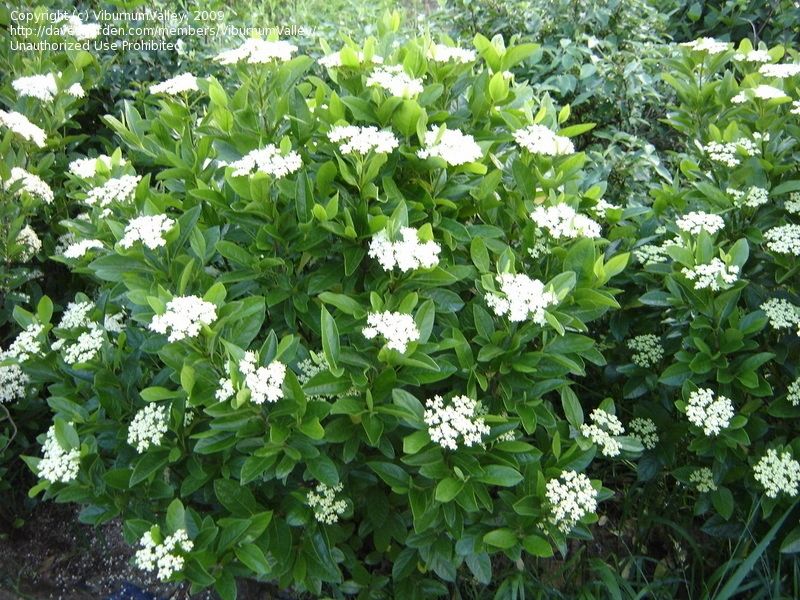
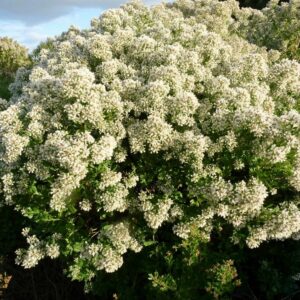
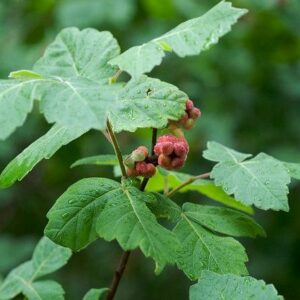
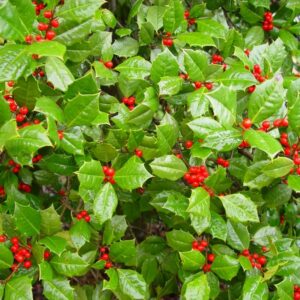
A tall viburnum, occasionally growing as a small tree, 20-25 ft. tall. Slender, erect-arching branches, somewhat open at maturity, often suckering. Attractive white flower clusters, dense dark-green summer foliage, wine-red fall color, blue-black berries which persist through winter. Shrub or small tree with short trunk, compact, rounded crown of drooping branches, small white flowers in clusters, and small bluish-black fruit. When cut, the plants sprout from roots, and old branches will often arch down and take root. Songbirds, gamebirds, and mammals eat the fruit in winter.
Please note: Most pictures represent mature plants. Unless otherwise specified, all of our plants are sold in 4″ pots to make shipping possible and will mature in time.
Viburnum lentago, commonly known as nannyberry, is a versatile native shrub or small tree valued for its fragrant spring flowers, attractive foliage, edible fruit, and exceptional wildlife benefits. Native to much of eastern and central North America, nannyberry is an excellent choice for native plant gardens, wildlife habitat, pollinator gardens, hedgerows, woodland edges, and naturalized landscapes.
In late spring, nannyberry produces flat clusters of small, fragrant white flowers that attract native bees, butterflies, and other pollinators. The flowers are followed by clusters of oval berries that mature from green to pink and eventually dark blue or nearly black in late summer and fall. These fruits provide an important food source for birds and other wildlife and can also be used by people when properly prepared.
Nannyberry offers several seasons of ornamental interest. Its glossy green foliage provides attractive texture during spring and summer before developing shades of yellow, red, and purple in fall. The shrub’s upright, spreading form works well in hedgerows and borders, while its ability to grow as a small tree makes it a versatile choice for larger native landscapes.
Viburnum lentago is adaptable and grows well in full sun to partial shade and a range of soil conditions, including moist soils. It naturally occurs along woodland edges, thickets, wetlands, and stream margins, making it a valuable option for naturalized areas and wildlife-focused plantings.