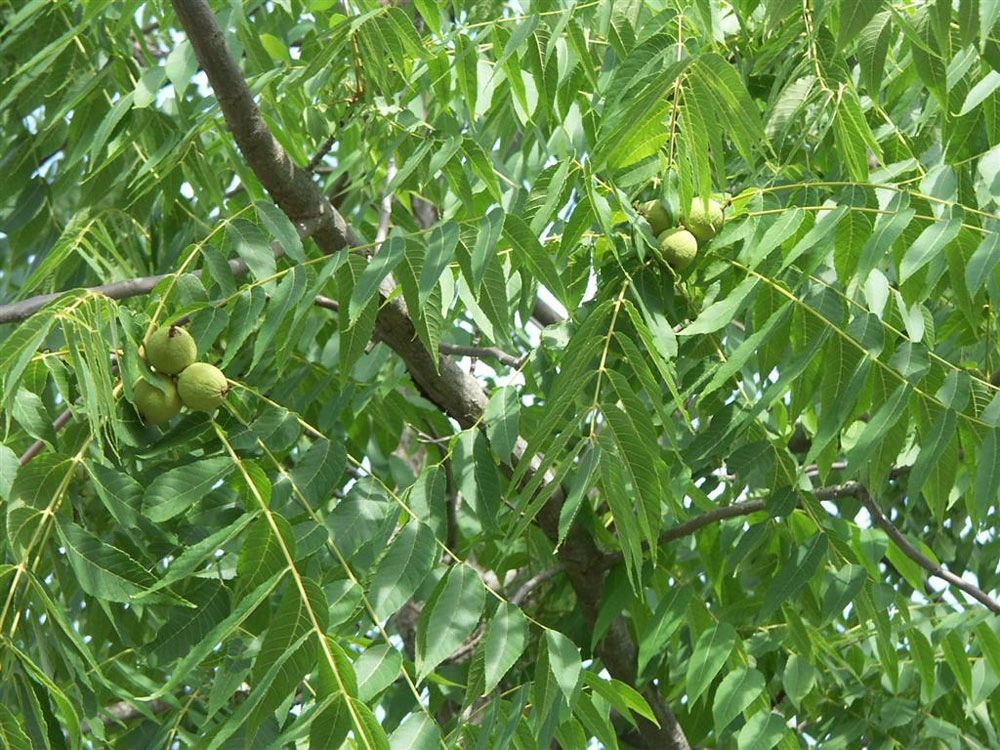
Black walnut is a large, rugged, deciduous tree, 50-75 ft. in height and width, sometimes reaching 150 ft. tall. Dark, furrowed bark on the trunk. Wide-spreading branches form an upright, umbrella-like crown in the woods or a round-topped crown in the open. The well-formed trunk is usually devoid of branches a considerable distance from the ground. Leaves up to 2 feet long with 5 to 11 pairs of leaflets along a central axis and a single leaflet at the tip; midrib of the lateral leaflets off-center with the wider part of the blade toward the leaf tip. Leaflets emerge very late in spring and are yellow-green.
Fall color is clear yellow, unless the tree has been troubled with insects or leaf blight. Flowers inconspicuous, in elongate, green clusters. Fruit 1 1/2 to 2 1/4 inches in diameter, consisting of a hard-shelled, furrowed nut enclosed in a green husk, darker when ripe. The delicious nuts must be gathered early, before squirrels and other wildlife can consume them. Of all the native nut trees of North America, the Black Walnut is the most valuable.
$19.99 – $59.99Price range: $19.99 through $59.99
Please note: Most pictures represent mature plants. Unless otherwise specified, all of our plants are sold in 4″ pots to make shipping possible and will mature in time.
Learn more about how the process works and how our plants are delivered.
| Native | |
|---|---|
| Wetland Indicator | |
| Sunlight | |
| Special Attributes | Bird Attractor, Butterfly Attractor, Salt Tolerant, Shade Tree |
| Moisture | |
| Bloom Period | May to June |
| Size | 1 Gallon, 3 Gallon, 5 Gallon |
Juglans nigra, commonly known as Black Walnut, is a large, long-lived native deciduous tree prized for its impressive size, attractive compound foliage, valuable hardwood, and edible nuts. Native to eastern and central North America, this majestic tree is an excellent choice for large properties, woodland landscapes, parks, restoration plantings, and naturalized areas.
Throughout the growing season, Juglans nigra develops a broad, rounded canopy of long, pinnately compound leaves that provide excellent shade. In spring, small greenish flowers appear, followed by round nuts enclosed in thick green husks that mature in fall. The nutritious walnuts provide an important food source for squirrels, birds, and other wildlife, while the tree itself provides valuable habitat and cover.
Black Walnut performs best in full sun and prefers deep, fertile, well-drained soil with consistent moisture. Once established, it develops a strong, substantial form and can live for many decades. Its attractive bark, spreading canopy, and rich autumn foliage provide additional seasonal interest, making it a striking specimen tree for large landscapes.
With its impressive mature size, valuable nuts, attractive foliage, and significant wildlife value, Juglans nigra is an outstanding native shade tree for gardeners and landowners looking to add beauty, habitat, and long-term ecological value to spacious landscapes.