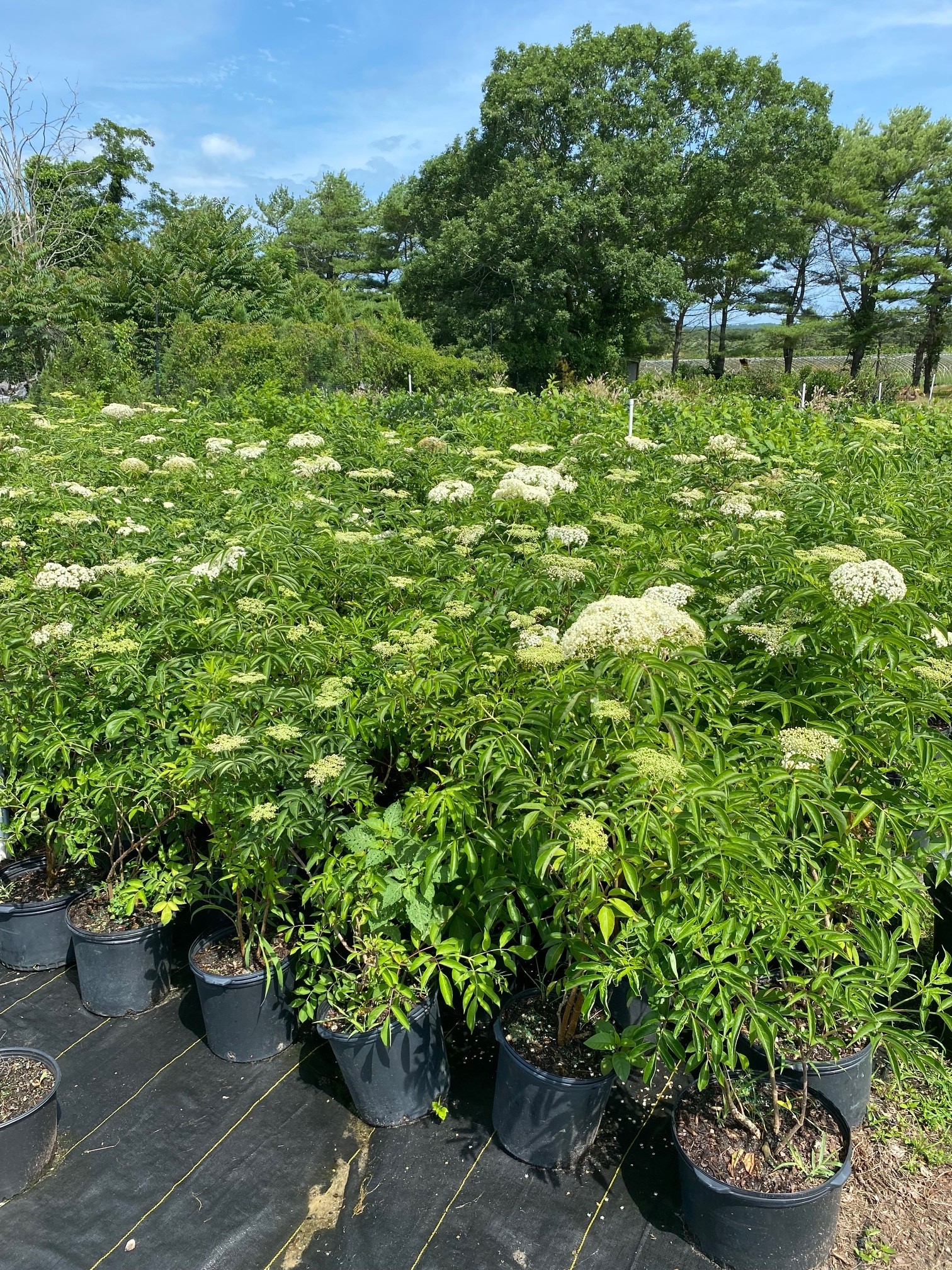
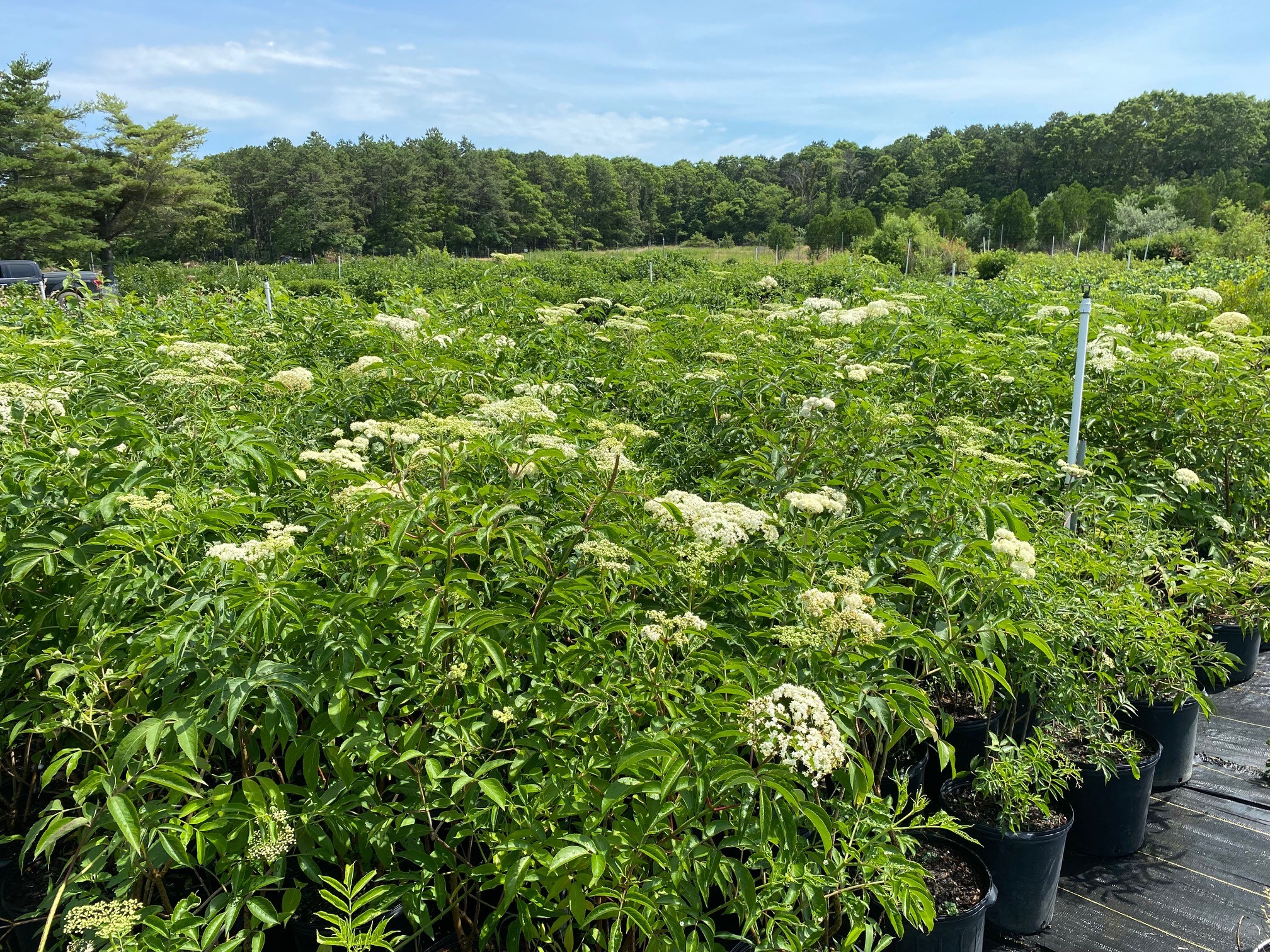
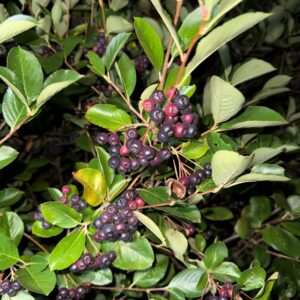
Sambucus canadensis, commonly known as American elderberry, is a versatile native shrub prized for its clusters of fragrant white flowers, dark purple-black berries, and exceptional value to wildlife. Native to eastern and central North America, this fast-growing shrub is an excellent choice for native plant gardens, pollinator gardens, wildlife habitat, rain gardens, hedgerows, and naturalized landscapes.
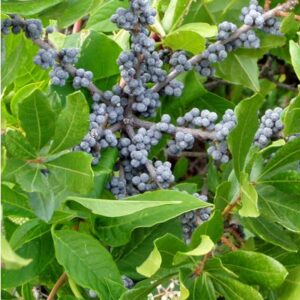
In early to mid-summer, American elderberry produces large, flat clusters of small white flowers that attract a wide variety of native bees, butterflies, and other beneficial pollinators. These blooms are followed by abundant clusters of dark berries that ripen later in the summer. The fruit is an important food source for birds and other wildlife and can also be used by people when properly cooked and prepared.
With its attractive compound foliage, showy summer flowers, and colorful fruit, Sambucus canadensis provides multiple seasons of interest in the landscape. Its dense, branching growth habit makes it useful for wildlife cover, hedgerows, property borders, and naturalized plantings, while its flowers and berries provide valuable seasonal resources for a diverse range of species.
American elderberry is adaptable and performs particularly well in moist, fertile soils and can tolerate both full sun and partial shade. It is a natural fit for low-lying areas, woodland edges, stream margins, and rain gardens where consistent moisture is available. Give this vigorous native shrub adequate space to develop, especially when planting it as part of a naturalized or wildlife-focused landscape.