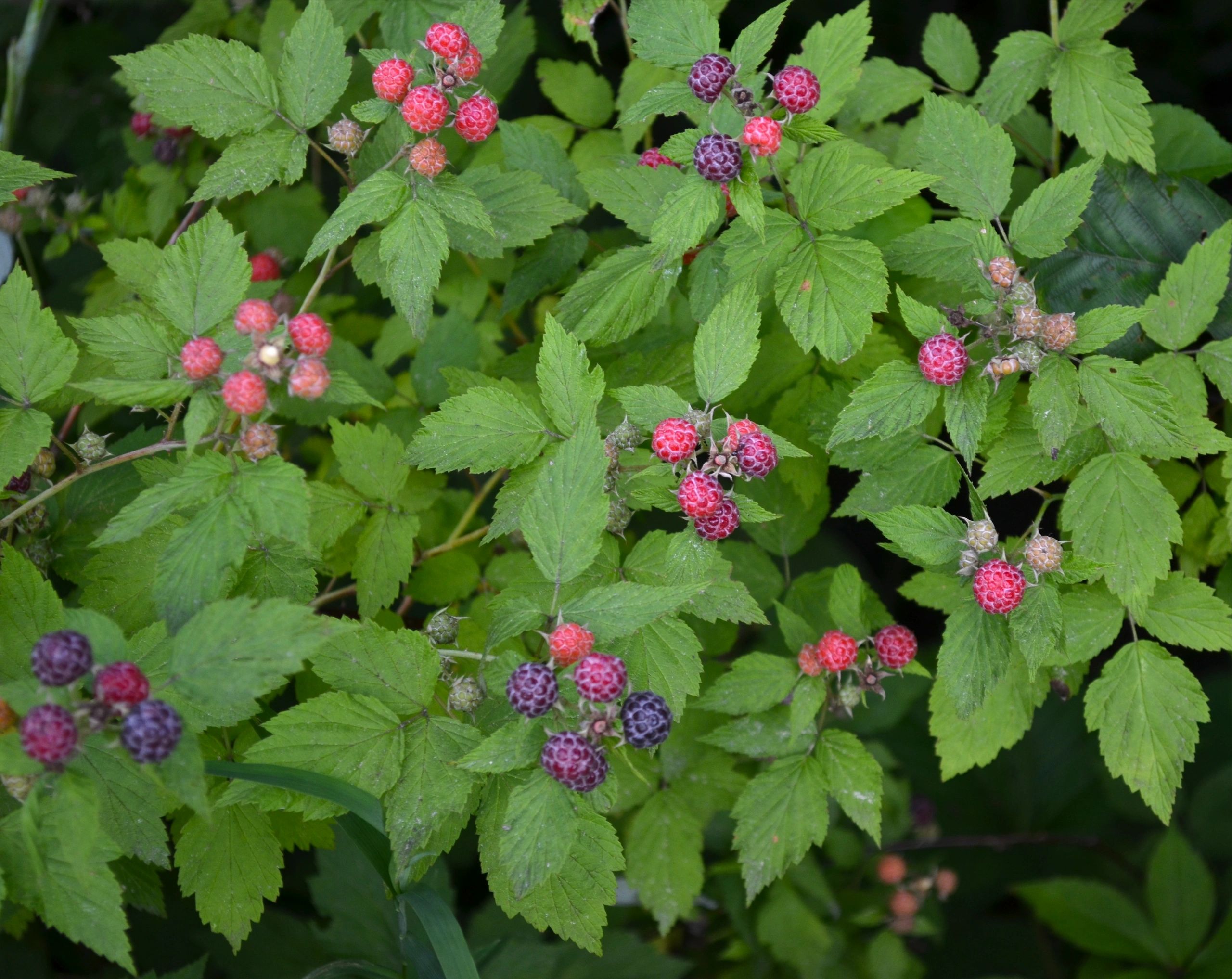
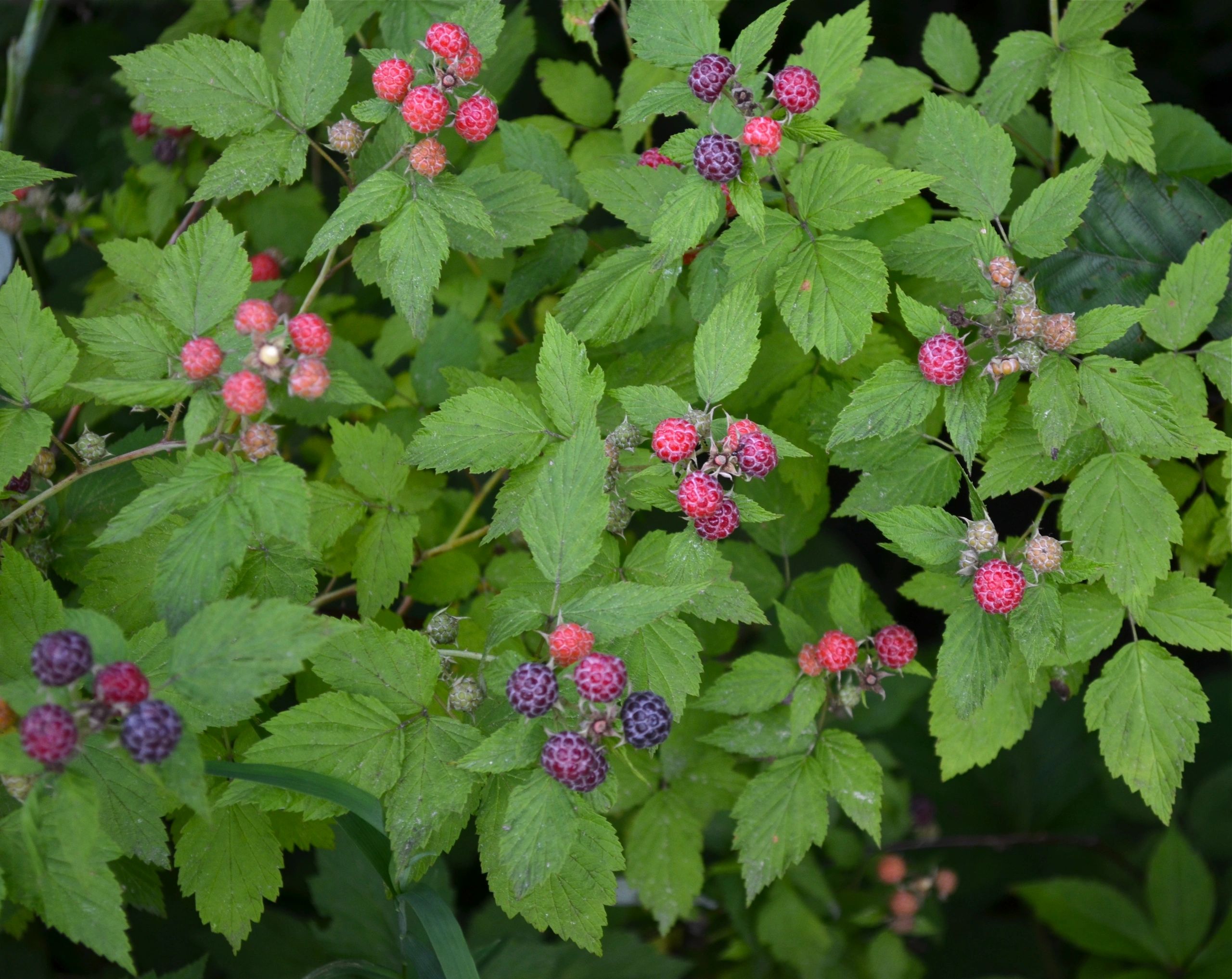
Rubus occidentalis, commonly known as Black Raspberry, is a vigorous native deciduous shrub prized for its edible berries, attractive arching stems, and excellent wildlife value. Native to eastern and central North America, this productive fruiting plant is an excellent choice for native plant gardens, wildlife gardens, edible landscapes, woodland edges, hedges, and naturalized areas.
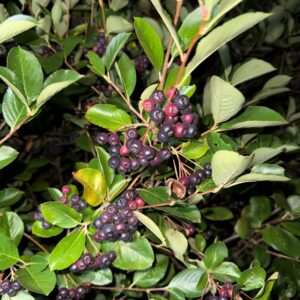
In late spring to early summer, Rubus occidentalis produces small white flowers that attract bees, butterflies, and other beneficial pollinators. The flowers develop into clusters of berries that ripen from red to deep purple-black in summer. The flavorful fruit is enjoyed fresh and can also be used in jams, jellies, desserts, and other culinary preparations. The berries also provide an important food source for birds and other wildlife.
Black Raspberry performs best in full sun to partial shade and prefers well-drained, fertile soil with consistent moisture. Its long, arching canes can form dense thickets, making it useful for naturalized plantings, wildlife habitat, and erosion control. Once established, it is relatively low maintenance, although pruning can help manage its vigorous growth and improve fruit production.
With its delicious summer fruit, attractive flowers, pollinator appeal, and strong wildlife value, Rubus occidentalis is an excellent native fruiting shrub for gardeners looking to combine edible landscaping with habitat and ecological value.