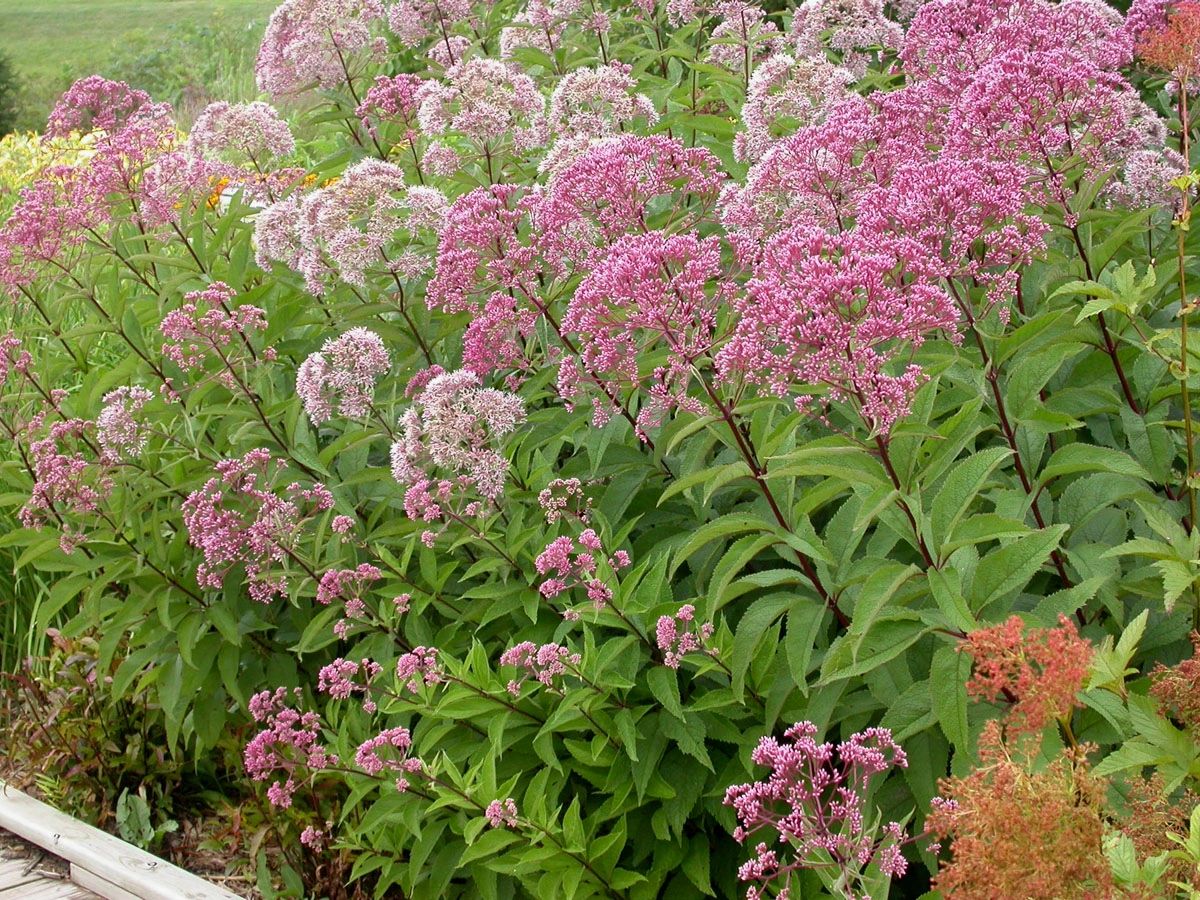
A robust, upright perennial with hollow purple stems accented by huge, rounded, tight clusters of pink or purplish-mauve flowers. It is an important pollen and nectar plant and attracts butterflies (particularly the swallowtail butterfly) and other pollinators by the dozens. The height makes it an excellent background plant in border perennial beds, but is also majestic standing alone. Flower color is darker in cooler weather.
Please note: Most pictures represent mature plants. Unless otherwise specified, all of our plants are sold in 4″ pots to make shipping possible and will mature in time.
Eutrochium fistulosum, also known as Eupatorium fistulosum and commonly known as Joe-Pye Weed, is a striking native perennial prized for its tall, upright growth habit and large clusters of rosy-purple flowers. A beautiful choice for pollinator gardens, rain gardens, native plant gardens, wet meadows, perennial borders, and naturalized landscapes, Joe-Pye Weed adds height, color, and valuable wildlife habitat to the garden.
This adaptable perennial thrives in full sun to partial shade and moist to wet soils, making it an excellent choice for rain gardens, pond edges, and other moisture-rich planting areas. Its abundant flowers are highly attractive to butterflies, bees, and other beneficial pollinators, while its impressive height provides structure and a dramatic backdrop for shorter perennials and native grasses.
Whether you’re creating a pollinator-friendly garden, adding vertical interest to a perennial border, or looking for a dependable native plant for a moist landscape, Eutrochium fistulosum offers beauty, resilience, and ecological value. Its late-season blooms help provide an important source of nectar for pollinators when many other plants have finished flowering.