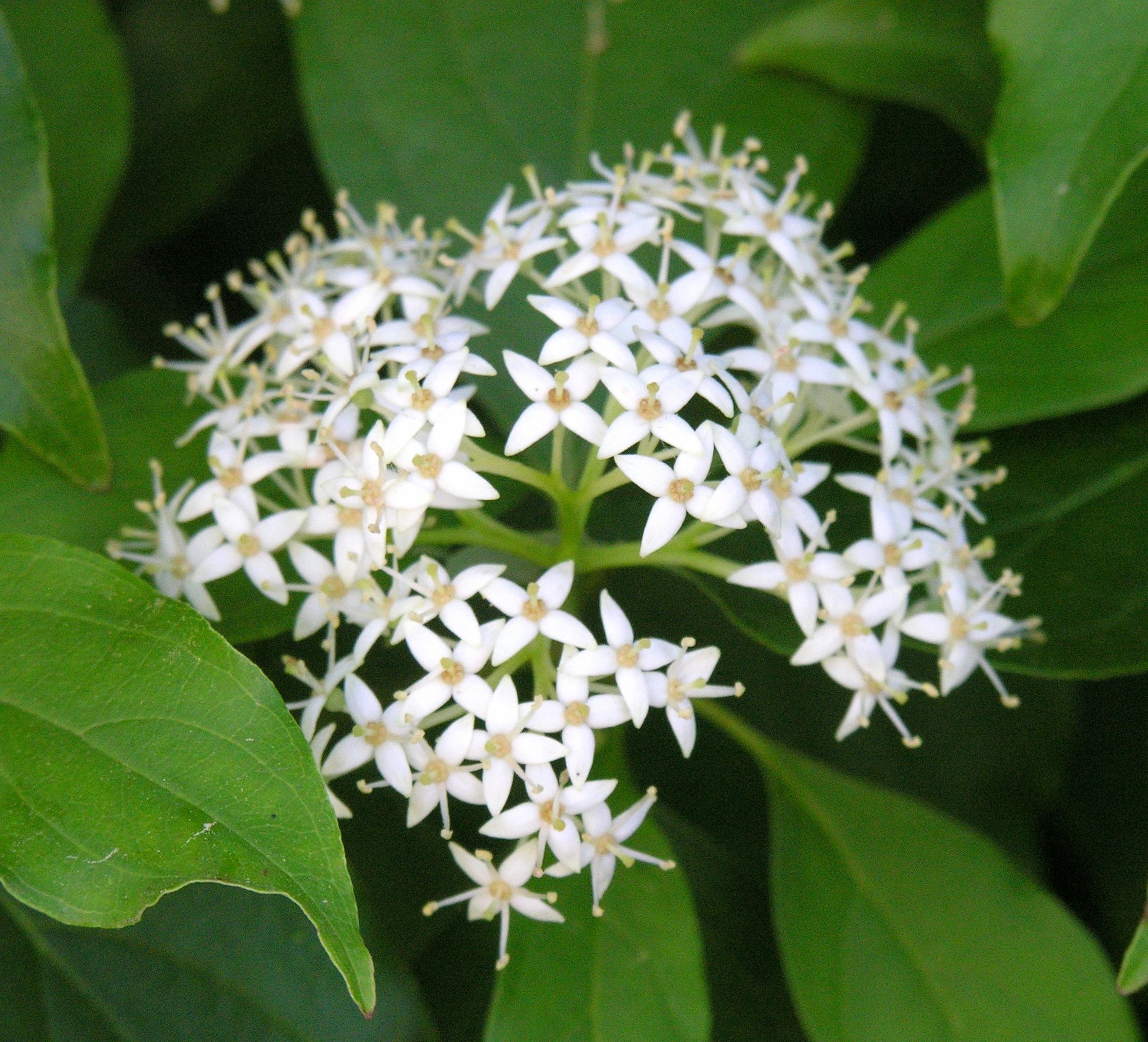
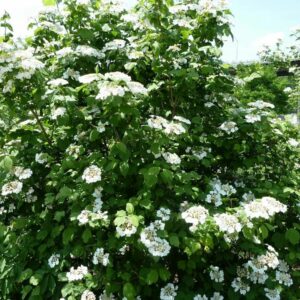
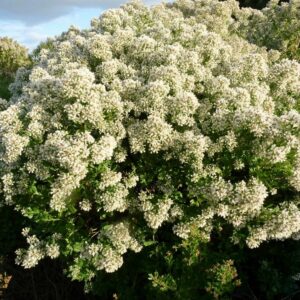
Gray dogwood is a deciduous shrub which is native to Missouri and typically occurs in moist or rocky ground along streams, ponds, wet meadows, glade and prairie margins, thickets and rocky bluffs. It grows 10-15′ tall and features white flowers borne in terminal racemes in late spring and grayish-green, elliptic to lance-shaped leaves (2-4″ long.) Foliage turns an interesting dusky purplish red in fall. Terminal stems holding the flowers are distinctively red and provide interesting contrast to the clusters of small white berries which form after the flowers have dropped. Red stem color is more easily seen after the fruits are gone, and red color often persists into early winter.
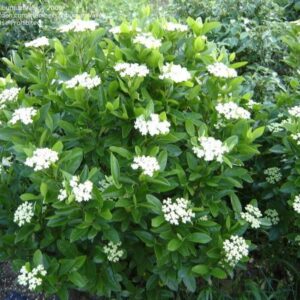
Please note: Most pictures represent mature plants. Unless otherwise specified, all of our plants are sold in 4″ pots to make shipping possible and will mature in time.
Cornus racemosa, commonly known as Gray Dogwood, is a hardy, deciduous native shrub valued for its attractive white flowers, clusters of white berries, and distinctive red stems. Native to much of eastern and central North America, this adaptable shrub is an excellent choice for native plant gardens, wildlife gardens, hedges, borders, woodland edges, and naturalized landscapes.
In late spring to early summer, Cornus racemosa produces rounded clusters of small, creamy-white flowers that attract bees, butterflies, and other beneficial pollinators. The flowers are followed by clusters of white to pale blue berries that provide an important food source for birds and other wildlife. Its green foliage adds seasonal interest before developing warm reddish-purple tones in fall.
Gray Dogwood performs well in full sun to partial shade and adapts to a wide range of soil conditions, including moist and periodically wet soils. Once established, it is relatively low maintenance and can form dense colonies, making it useful for naturalized plantings, erosion control, wildlife habitat, and informal screening.
With its showy flower clusters, wildlife-friendly berries, attractive stems, and adaptability to a variety of growing conditions, Cornus racemosa is an excellent native shrub for gardeners seeking a durable and ecologically valuable addition to the landscape.