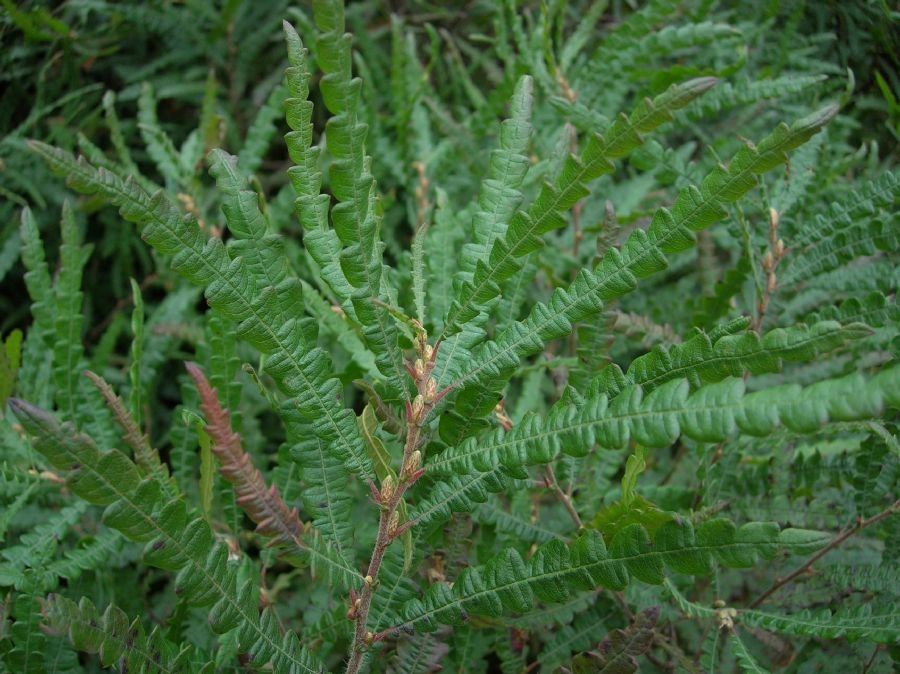
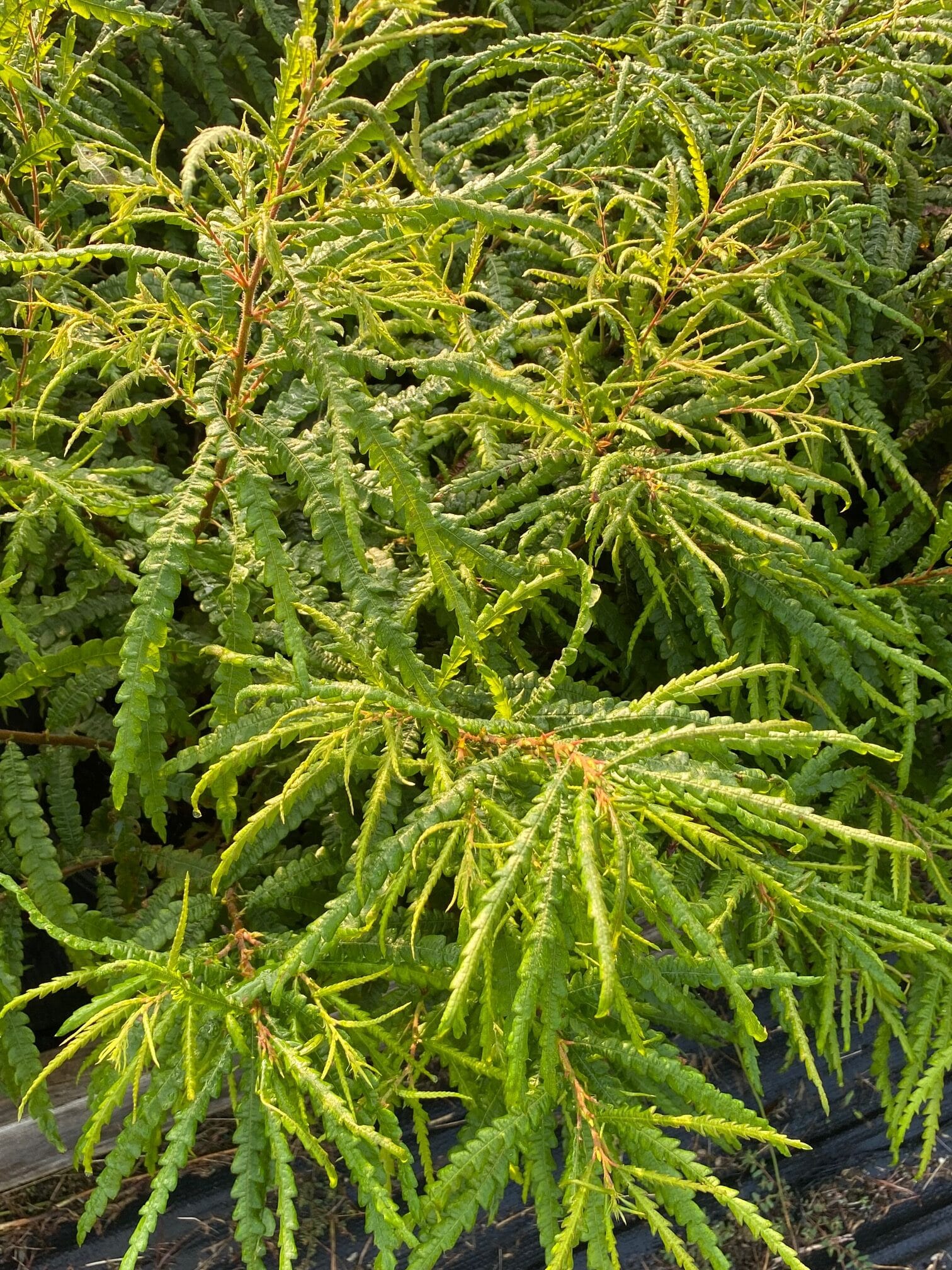
A small, aromatic mound-shaped shrub, 2-4 ft. tall, occurring in dense colonies. Multiple stems with loose, spreading branches. Long, narrow, olive-green leaves, the edges of which have rolled back edges and rounded, fern-like division.
Flowers are brown catkins that appear before the leaves unfold. A small nut is enclosed in a bur-like husk. Sweet-fern is a member of the wax-myrtle or bayberry family, which occurs nearly worldwide, with about 40 species of small trees and shrubs; 5 native tree species and 3 shrub species in North America. The leaves are very aromatic when crushed.
Straight Species

$14.99 – $29.99Price range: $14.99 through $29.99
Please note: Most pictures represent mature plants. Unless otherwise specified, all of our plants are sold in 4″ pots to make shipping possible and will mature in time.
Learn more about how the process works and how our plants are delivered.
| Native | |
|---|---|
| Sunlight | |
| Special Attributes | |
| Moisture | |
| Bloom Period | April to May |
| Size | 1 Gallon, 1 Quart, 2 Gallon |
Comptonia peregrina (Sweetfern) is a distinctive North American native shrub valued for its fragrant foliage, attractive form, and ability to thrive in dry, sandy, and nutrient-poor soils. Despite its name, Sweetfern is not a true fern; it is a low-growing, deciduous shrub with finely textured, fern-like leaves that release a pleasant sweet fragrance when crushed.
Small, inconspicuous flowers appear in spring, followed by distinctive burr-like fruits, while the aromatic foliage provides texture and interest throughout the growing season. Comptonia peregrina is an excellent choice for native plant gardens, woodland edges, coastal landscapes, sandy gardens, meadows, and naturalized areas where well-drained or infertile soils can make plant establishment challenging. Once established, Sweetfern is drought tolerant and requires minimal maintenance, making it especially useful for sustainable and low-water landscapes.
Its spreading habit can also help stabilize soil and provide cover for wildlife, while its ability to fix nitrogen contributes to soil improvement. With its unique foliage, adaptability, and ecological value, Sweetfern is an excellent native plant for gardeners looking to create a resilient, wildlife-friendly landscape in dry or sandy conditions.