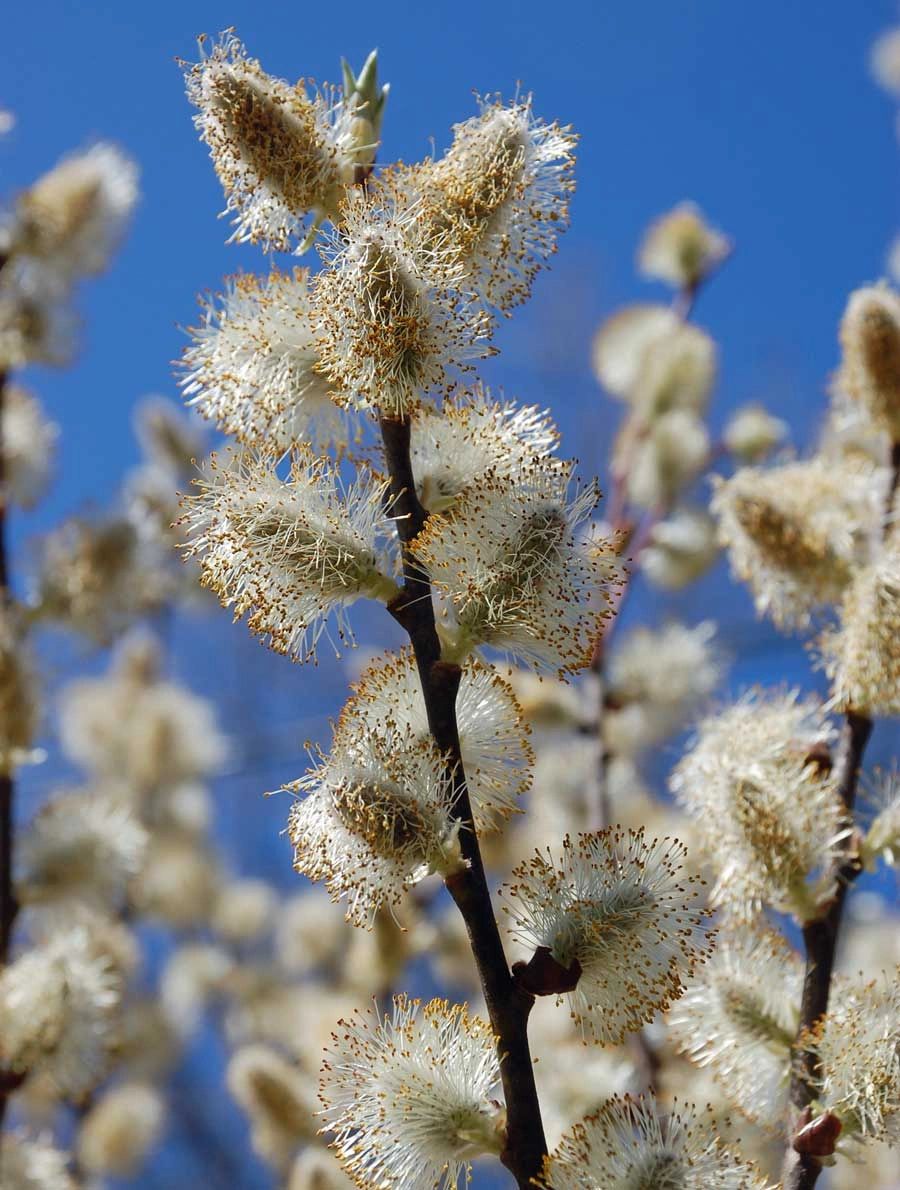
Salix discolor, commonly known as pussy willow, is a beloved native shrub prized for its distinctive silvery catkins, early-season blooms, wildlife value, and graceful growth habit. Native to much of North America, this fast-growing deciduous shrub is an excellent choice for native plant gardens, pollinator gardens, rain gardens, wetland plantings, wildlife habitat, and naturalized landscapes.
One of the earliest signs of spring, pussy willow produces its familiar soft, silvery pussy willow catkins on bare branches in late winter and early spring. As the season progresses, the catkins mature and provide an important early-season resource for native bees and other pollinators when relatively few other plants are in bloom. The attractive branches are also popular for seasonal floral arrangements and can bring ornamental interest to the winter and early spring landscape.
Beyond its ornamental appeal, Salix discolor is an important native plant for wildlife. Willows support a wide range of insects, including numerous native caterpillar species, which in turn provide food for birds and other wildlife. Its dense growth can also offer cover and nesting habitat for birds and small animals, making pussy willow a valuable addition to wildlife-friendly landscapes.
Pussy willow naturally grows in moist to wet soils and is particularly well suited to areas along streams, ponds, drainage areas, wetlands, and other locations that retain moisture. It can tolerate wetter conditions than many traditional landscape shrubs, making it a useful choice for rain gardens and naturalized wet areas. Plant it in full sun to partial shade and provide plenty of room for its vigorous growth.
Whether you’re looking to add an iconic native spring-blooming shrub, provide early-season resources for pollinators, or create habitat in a moist area of your property, Salix discolor is a versatile and ecologically valuable choice. Its unmistakable catkins, fast growth, and importance to native wildlife make pussy willow a standout addition to a native landscape or wildlife garden.