

Sassafras albidum, commonly known as sassafras, is a distinctive native North American tree prized for its unique foliage, aromatic qualities, brilliant fall color, and exceptional value to wildlife. Native throughout much of the eastern United States, sassafras is an excellent choice for native plant gardens, woodland gardens, wildlife habitat, pollinator gardens, and naturalized landscapes.
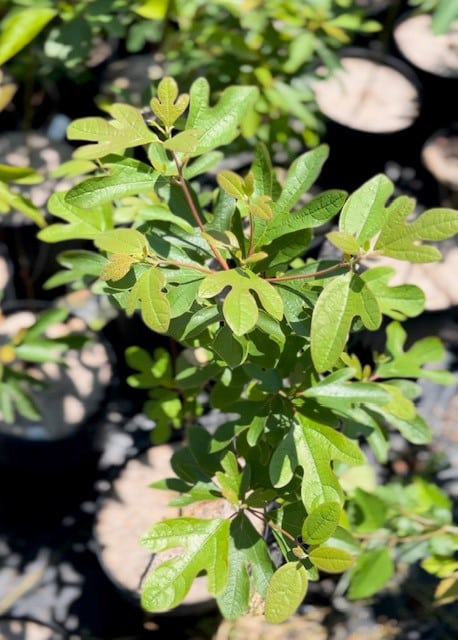
One of sassafras’s most recognizable features is its unusual foliage, with individual trees producing oval, mitten-shaped, and three-lobed leaves. In autumn, the leaves turn vibrant shades of yellow, orange, scarlet, and red, creating an impressive seasonal display. Its attractive branching structure and smooth bark add interest throughout the year.
In spring, Sassafras albidum produces small yellowish flowers that provide an early-season food source for native bees and other pollinators. Female trees produce small blue-black fruits on bright red stalks that are valued by birds. Sassafras also serves as a host plant for the spicebush swallowtail butterfly, making it an especially valuable addition to wildlife-friendly landscapes.
Sassafras grows well in full sun to partial shade and prefers well-drained soils. It naturally occurs along woodland edges, open forests, and old fields, where its tendency to spread by root suckers can allow it to form colonies and provide valuable layered habitat.