

Juglans nigra, commonly known as Black Walnut, is a large, long-lived native deciduous tree prized for its impressive size, attractive compound foliage, valuable hardwood, and edible nuts. Native to eastern and central North America, this majestic tree is an excellent choice for large properties, woodland landscapes, parks, restoration plantings, and naturalized areas.
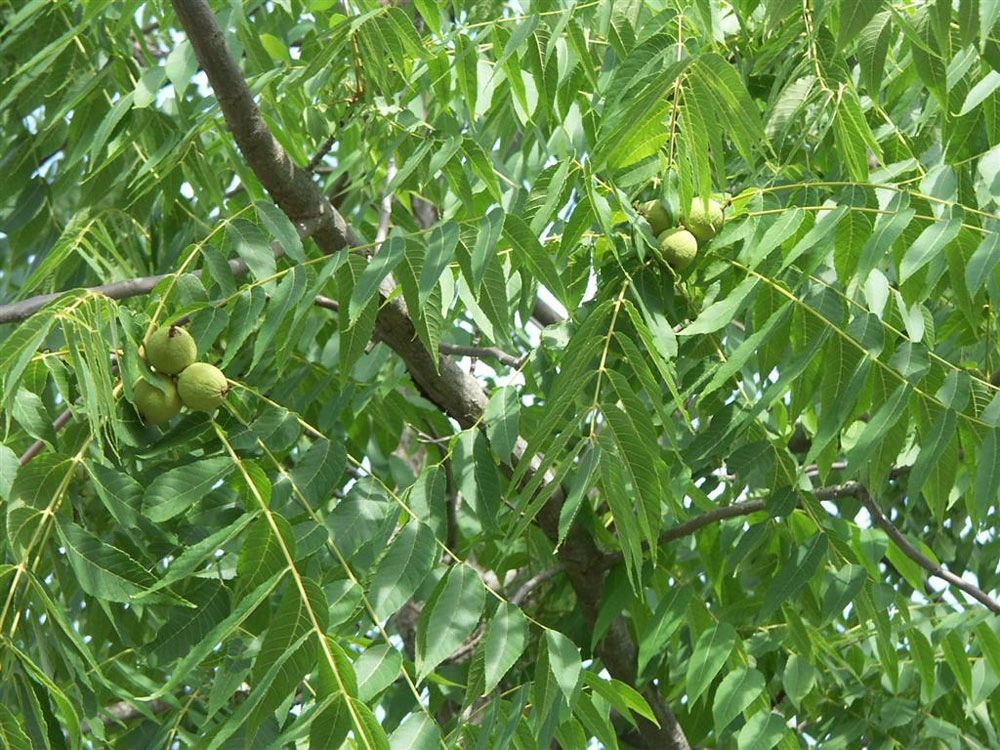
Throughout the growing season, Juglans nigra develops a broad, rounded canopy of long, pinnately compound leaves that provide excellent shade. In spring, small greenish flowers appear, followed by round nuts enclosed in thick green husks that mature in fall. The nutritious walnuts provide an important food source for squirrels, birds, and other wildlife, while the tree itself provides valuable habitat and cover.
Black Walnut performs best in full sun and prefers deep, fertile, well-drained soil with consistent moisture. Once established, it develops a strong, substantial form and can live for many decades. Its attractive bark, spreading canopy, and rich autumn foliage provide additional seasonal interest, making it a striking specimen tree for large landscapes.
With its impressive mature size, valuable nuts, attractive foliage, and significant wildlife value, Juglans nigra is an outstanding native shade tree for gardeners and landowners looking to add beauty, habitat, and long-term ecological value to spacious landscapes.