

Ammophila breviligulata, commonly known as American Beachgrass, is a hardy native ornamental grass valued for its ability to stabilize sandy soils, withstand coastal conditions, and thrive in challenging environments. Native to the Atlantic and Great Lakes coasts of North America, this vigorous perennial grass is an excellent choice for coastal landscapes, dune restoration, native plant gardens, erosion control, and naturalized areas.
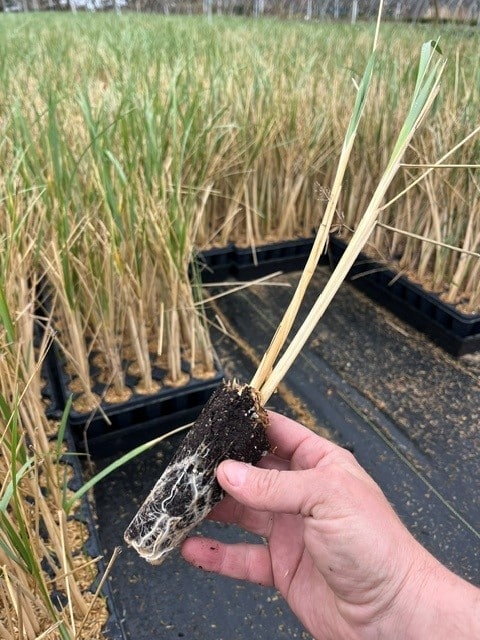
During the growing season, Ammophila breviligulata forms dense clumps of narrow, blue-green foliage with upright flower stalks rising above the leaves in summer. Its strong, extensive rhizomatous root system allows American Beachgrass to spread through sandy soils and helps stabilize dunes and prevent erosion. The foliage also provides valuable cover and habitat for coastal wildlife.
American Beachgrass performs best in full sun and thrives in sandy, well-drained soils. It is highly tolerant of drought, salt spray, wind, and harsh coastal conditions, making it an excellent choice for seaside landscapes and exposed sites where many other plants may struggle. Once established, it requires minimal maintenance and can spread effectively to help stabilize shifting sand.
With its distinctive blue-green foliage, vigorous growth habit, exceptional coastal tolerance, and important role in dune stabilization, Ammophila breviligulata is an outstanding native grass for sustainable coastal landscapes, erosion control projects, and naturalized plantings.